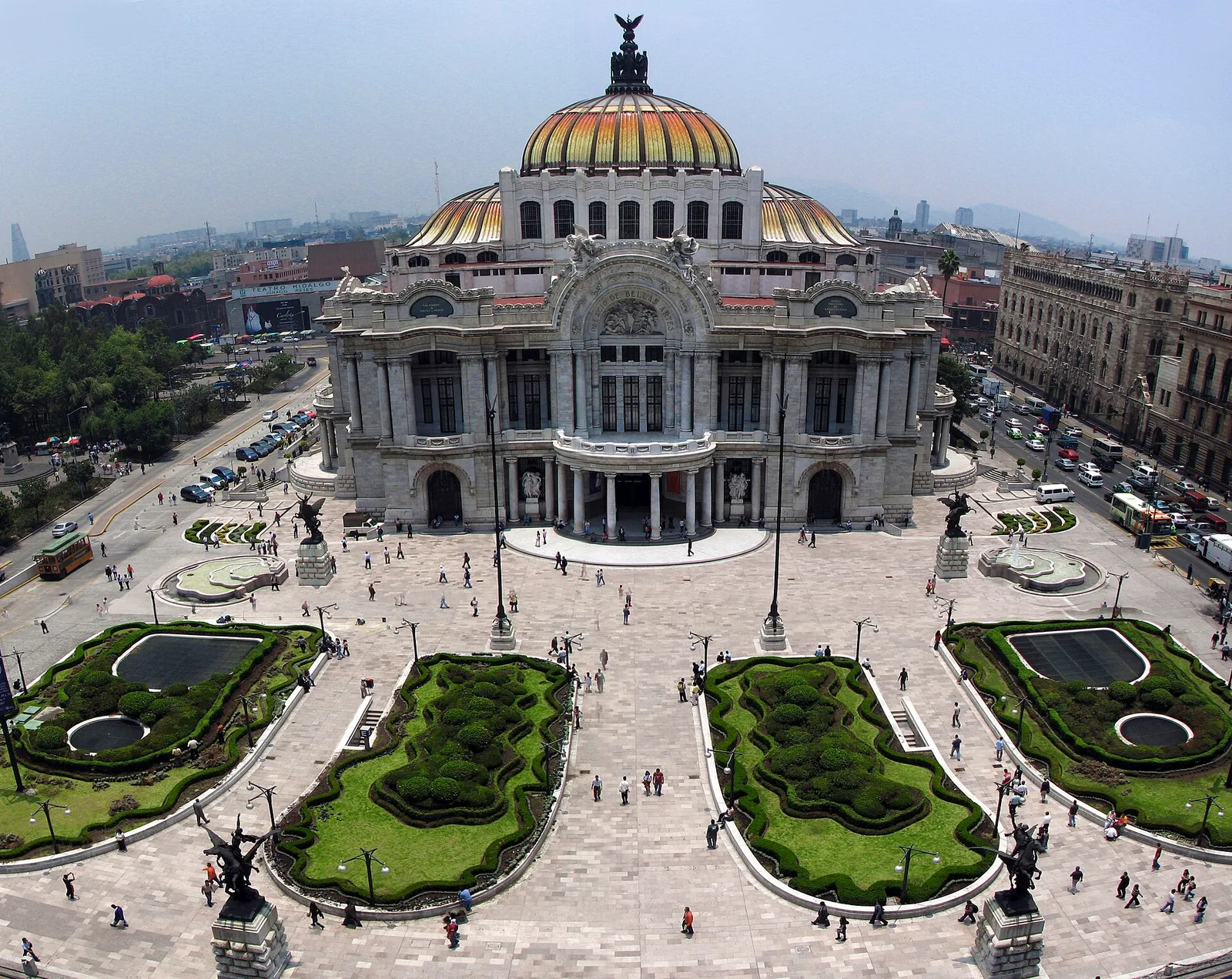
The essentials
- A couple typically spends $2,800–$4,200 per month; a single person $1,800–$2,800.
- Long-term rent: $1,100–$2,000 for a 1-bedroom, $1,500–$2,800 for a 2-bedroom.
- Climate: Spring-like year-round; dry winters, afternoon rains June–September. Air quality dips in dry season.
More things to know
- Best for: remote workers, culture lovers, career movers, foodies.
In this guide
What it's like to live in Mexico City
Mexico City is the default choice for remote workers and anyone who wants big-city energy. Leafy, walkable neighborhoods like Roma Norte and Condesa have cafés, coworking spaces and parks on every block, while the city's museums, markets and restaurant scene rival any capital in the world.
The trade-offs are real: rents in the most popular expat neighborhoods have risen sharply since 2020, traffic is intense, the dry season brings air-quality alerts, and the city sits in an active seismic zone. Many newcomers find better value in Del Valle, Narvarte, Coyoacán or San Rafael, which are a short ride from the hotspots.
For residency, CDMX is also the most convenient place to be: INM offices, notaries, banks and immigration facilitators are plentiful, and international flights make visa runs and family visits easy.
Mexico City at a glance
| State / region | Mexico City (CDMX) · Central Highlands |
|---|---|
| Population | 9.2M city / 22M metro |
| Elevation | 2,240 m (7,349 ft) |
| Climate | Spring-like year-round; dry winters, afternoon rains June–September. Air quality dips in dry season. |
| Avg. daily highs | 22°C in winter · 25°C in the hottest months |
| Airport | MEX (Benito Juárez) and AIFA — direct flights to most of North America and Europe |
| Expat community | Very large |
| Best for | Remote workers, Culture lovers, Career movers, Foodies |
Cost of living in Mexico City (2026)
| Monthly (USD) | Typical range |
|---|---|
| Single person, all-in | $1,800–$2,800 |
| Couple, all-in | $2,800–$4,200 |
| 1-bedroom rent (long-term) | $1,100–$2,000 |
| 2-bedroom rent (long-term) | $1,500–$2,800 |
These are editorial estimates for a comfortable lifestyle in the neighborhoods foreigners commonly choose, not survey data (how we estimate costs); local-style living costs less. Build a personal estimate with the cost of living calculator. Remember you'll also need to meet residency requirements — about $4,432/month income for temporary residency (check your eligibility).
A sample monthly budget for a couple
Our cost model's estimate for a couple living comfortably in Mexico City, renting a 2-bedroom, without a car, with private health insurance for two adults under 50:
| Item | Per month (USD) |
|---|---|
| Rent | $2,150 |
| Utilities & gas | $75 |
| Internet & phones | $60 |
| Groceries | $590 |
| Dining out & entertainment | $460 |
| Transport | $95 |
| Health insurance | $220 |
| Out-of-pocket health & pharmacy | $125 |
| Household help | $225 |
| Personal, clothing & misc. | $180 |
| Total | $4,180 |
Insurance rises with age: in our model the same couple pays about $300 more a month if both are 50–64, and about $820 more at 65 and over. Change any assumption in the calculator.
Best neighborhoods in Mexico City for expats
- Roma Norte & Condesa: Tree-lined, walkable, the heart of the expat scene. Highest rents; noisy on weekends.
- Polanco: Upscale, safe, near Chapultepec Park and luxury shopping. Popular with families and executives.
- Coyoacán: Bohemian, colonial streets, quieter and more Mexican. Farther from the business districts.
- Del Valle & Narvarte: Residential, great value, excellent street food and Metrobus access.
- Juárez & San Rafael: Central, rapidly gentrifying, good for those who want to be close to everything.
Life in Mexico City
Mexico City is one of the world's great food cities, from street tacos and markets in every neighborhood to internationally acclaimed restaurants. Culture is everywhere: the National Museum of Anthropology and dozens of other museums, Chapultepec Park, and the historic center's palaces and plazas.
On Sundays the city closes Paseo de la Reforma and other avenues to cars for cycling, and neighborhood parks fill with families. A large international community, coworking spaces and language exchanges make it easy to meet people.
Weather in Mexico City through the year
Spring-like year-round; dry winters, afternoon rains June–September. Air quality dips in dry season. Average daytime highs run from about 22°C in the coolest months to 25°C in the hottest.
| Season | What to expect |
|---|---|
| Dry and mild (November–February) | Sunny days and cool nights; the season when air quality is often at its worst. |
| Warm and dry (March–May) | The warmest, driest months, when air-quality alerts are most common. |
| Rainy (June–October) | Clear mornings and heavy afternoon or evening downpours; some streets flood briefly. |
Visit in the season you'd find hardest before you commit to a lease.
Getting around Mexico City
The Metro and Metrobús bus-rapid-transit network reach most neighborhoods expats live in, Ecobici bike share covers the central areas, and rideshares are inexpensive. Central neighborhoods are very walkable. Driving is slow, and the Hoy No Circula program restricts some cars on certain days.
Airport: MEX (Benito Juárez) and AIFA — direct flights to most of North America and Europe.
Healthcare
Best in the country: Médica Sur, ABC (American British Cowdray), Ángeles and Español hospitals. See our healthcare guide for insurance and IMSS options.
Safety in Mexico City
Safety in Mexico is very local: conditions differ between states, cities and even neighborhoods. Before you move, read the current US State Department advisory for Mexico City (CDMX) at travel.state.gov, ask residents about the specific streets you're considering, and take normal big-city precautions — use rideshares at night, keep valuables out of sight and use ATMs inside banks.
Day trips and weekends from Mexico City
- Teotihuacan: The pyramids of the Sun and Moon, about an hour northeast.
- Cuernavaca and Tepoztlán: Warmer, lower towns about 1–1.5 hours south.
- Puebla and Cholula: Colonial architecture and food, about 2 hours east.
- Valle de Bravo: A lakeside town in pine forests, about 2.5 hours west.
Pros and cons of living in Mexico City
Pros
- ✓ Top private hospitals and specialists in Latin America
- ✓ Unmatched restaurants, museums and nightlife
- ✓ Excellent flight connections
- ✓ Deep professional and remote-work community
Cons
- ✕ Highest rents in Mexico in prime neighborhoods
- ✕ Traffic, noise and seasonal air pollution
- ✕ Earthquake risk — choose post-2017 or well-reinforced buildings
- ✕ Altitude can take a week or two to adjust to
Who Mexico City suits — and who should look elsewhere
Best for: remote workers, culture lovers, career movers, foodies.
Probably not for:
- People sensitive to altitude or air pollution
- Anyone who wants quiet, nature or a slower pace day to day
- Tight budgets set on living in Roma or Condesa
Still deciding? Compare all 12 cities, or read the step-by-step relocation guide.
Compare with similar cities
Frequently asked questions
How much does it cost to live in Mexico City in 2026?
A single person can live comfortably on roughly $1,800–$2,800 USD per month and a couple on $2,800–$4,200, with rent being the biggest variable. Living outside Roma/Condesa can save $400–$800 per month.
Is Mexico City safe for expats?
The neighborhoods most expats choose (Roma, Condesa, Polanco, Coyoacán, Del Valle) are generally safe with normal big-city precautions: use ride-hailing apps at night, avoid displaying valuables and be alert to pickpockets on the Metro.
Is the altitude in Mexico City a problem?
At 2,240 m, many newcomers feel breathless or tired for the first days. Most people adjust; if you have heart or lung conditions, talk to your doctor before moving.
Do you need a car in Mexico City?
Most expats in central neighborhoods don't. Walking, the Metro and Metrobús, bikes and rideshares cover daily life, and traffic makes driving slow.