The essentials
- A couple typically spends $1,900–$2,800 per month; a single person $1,300–$2,000.
- Long-term rent: $600–$1,000 for a 1-bedroom, $750–$1,300 for a 2-bedroom.
- Climate: Semi-arid: warm days, cool nights, short rainy season.
More things to know
- Best for: families, professionals, safety-first movers.
In this guide
What it's like to live in Querétaro
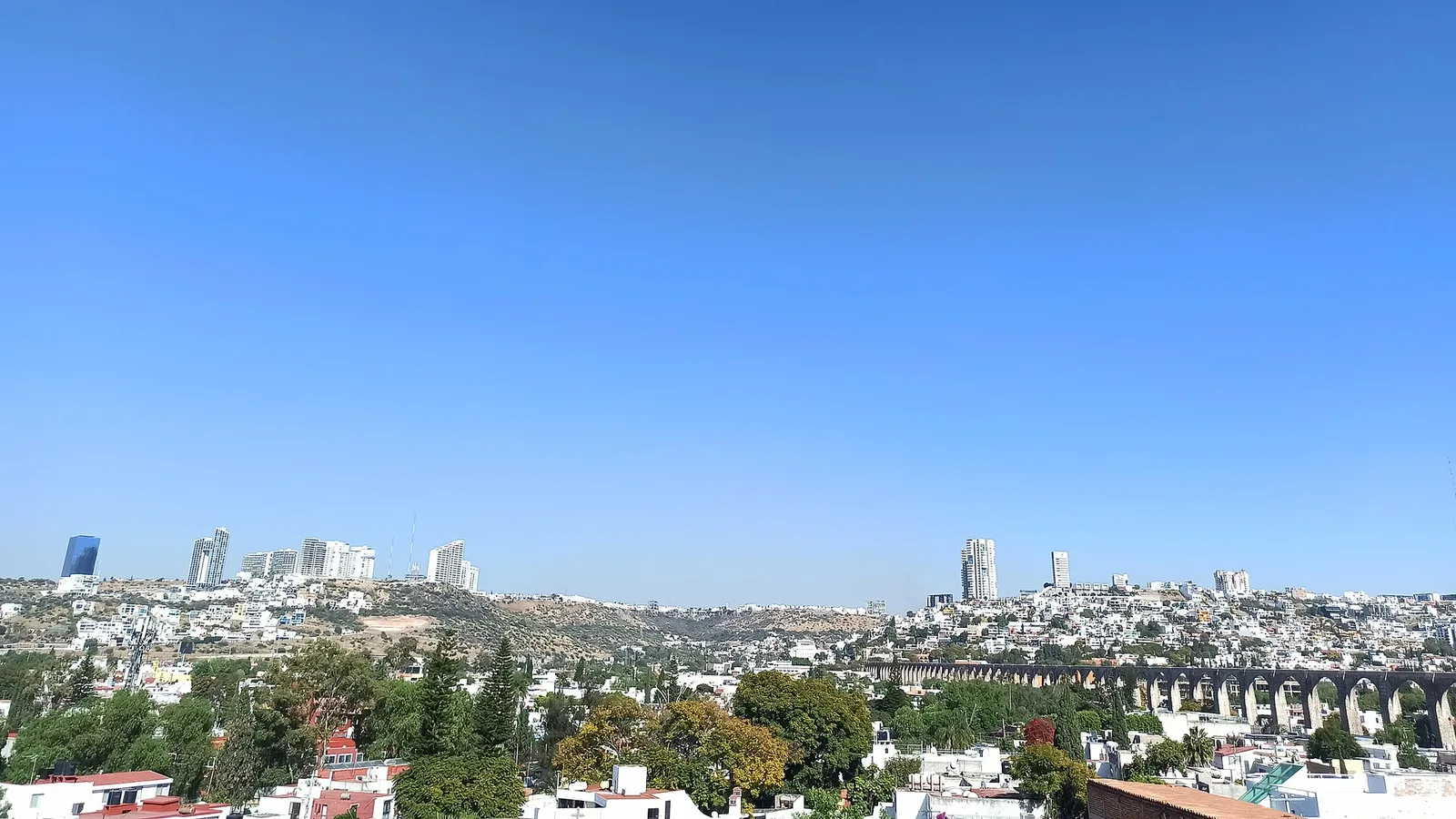
Querétaro has grown rapidly on the back of aerospace, automotive and tech investment, and consistently ranks among Mexico's safest large cities. Its UNESCO-listed historic center is clean and pedestrian-friendly, while the newer northern suburbs offer modern homes, malls and top private schools.
It's less of an expat destination than San Miguel (an hour away), which many see as a plus: you'll practice your Spanish and pay local prices. Water stress is a long-term concern in the region.
Querétaro at a glance
| State / region | Querétaro · Central Highlands |
|---|---|
| Population | 1.6M metro |
| Elevation | 1,820 m (5,971 ft) |
| Climate | Semi-arid: warm days, cool nights, short rainy season. |
| Avg. daily highs | 24°C in winter · 29°C in the hottest months |
| Airport | QRO — direct flights to Houston and Dallas; 2.5–3h drive to CDMX airports |
| Expat community | Medium |
| Best for | Families, Professionals, Safety-first movers |
Cost of living in Querétaro (2026)
| Monthly (USD) | Typical range |
|---|---|
| Single person, all-in | $1,300–$2,000 |
| Couple, all-in | $1,900–$2,800 |
| 1-bedroom rent (long-term) | $600–$1,000 |
| 2-bedroom rent (long-term) | $750–$1,300 |
These are editorial estimates for a comfortable lifestyle in the neighborhoods foreigners commonly choose, not survey data (how we estimate costs); local-style living costs less. Build a personal estimate with the cost of living calculator. Remember you'll also need to meet residency requirements — about $4,432/month income for temporary residency (check your eligibility).
A sample monthly budget for a couple
Our cost model's estimate for a couple living comfortably in Querétaro, renting a 2-bedroom, without a car, with private health insurance for two adults under 50:
| Item | Per month (USD) |
|---|---|
| Rent | $1,025 |
| Utilities & gas | $50 |
| Internet & phones | $60 |
| Groceries | $395 |
| Dining out & entertainment | $310 |
| Transport | $95 |
| Health insurance | $220 |
| Out-of-pocket health & pharmacy | $85 |
| Household help | $150 |
| Personal, clothing & misc. | $180 |
| Total | $2,570 |
Insurance rises with age: in our model the same couple pays about $300 more a month if both are 50–64, and about $820 more at 65 and over. Change any assumption in the calculator.
Best neighborhoods in Querétaro for expats
- Centro Histórico: Charming, walkable, colonial homes and plazas.
- Juriquilla: Upscale, safe, golf and lakes, popular with families.
- El Refugio & Zibatá: Planned communities with parks, schools and new construction.
- Álamos: Central residential area with good value.
Life in Querétaro
Querétaro combines a beautifully kept colonial center, with its landmark aqueduct, and a fast-growing modern city of new suburbs, malls and business parks. Weekends often mean the nearby wine and cheese route or the small historic towns of the Sierra.
Fewer foreigners live here than in San Miguel, so daily life runs in Spanish — an advantage for people who want immersion and local prices.
Weather in Querétaro through the year
Semi-arid: warm days, cool nights, short rainy season. Average daytime highs run from about 24°C in the coolest months to 29°C in the hottest.
| Season | What to expect |
|---|---|
| Dry and mild (November–February) | Sunny days and cool nights. |
| Warm (March–May) | The warmest, driest months. |
| Rainy (June–September) | Afternoon showers. |
Visit in the season you'd find hardest before you commit to a lease.
Getting around Querétaro
The historic center is compact and walkable; the newer suburbs are car-oriented. City buses, rideshares and taxis cover the metro area, and Mexico City is about 2.5–3 hours away by highway.
Airport: QRO — direct flights to Houston and Dallas; 2.5–3h drive to CDMX airports.
Healthcare
Very good: Hospital H+, Star Médica, Hospital Ángeles, Hospital San José. See our healthcare guide for insurance and IMSS options.
Safety in Querétaro
Safety in Mexico is very local: conditions differ between states, cities and even neighborhoods. Before you move, read the current US State Department advisory for Querétaro at travel.state.gov, ask residents about the specific streets you're considering, and take normal big-city precautions — use rideshares at night, keep valuables out of sight and use ATMs inside banks.
Day trips and weekends from Querétaro
- San Miguel de Allende: About an hour north.
- Bernal: A village beneath one of the world's largest monoliths, about an hour east.
- Wine and cheese route: Vineyards and cheese makers around Tequisquiapan and Ezequiel Montes.
- Sierra Gorda missions: UNESCO-listed Franciscan missions in the mountains, a longer drive northeast.
Pros and cons of living in Querétaro
Pros
- ✓ One of the safest big cities in Mexico
- ✓ Modern infrastructure and hospitals
- ✓ Strong economy and job market
- ✓ Central location for travel
Cons
- ✕ Smaller expat community
- ✕ Suburbs are car-dependent
- ✕ Water scarcity concerns
- ✕ Fast growth brings traffic
Who Querétaro suits — and who should look elsewhere
Best for: families, professionals, safety-first movers.
Probably not for:
- People who want a large expat community
- Anyone who wants a beach
- Those who prefer not to drive
Still deciding? Compare all 12 cities, or read the step-by-step relocation guide.
Compare with similar cities
Frequently asked questions
Is Querétaro better than San Miguel de Allende?
Querétaro is cheaper, more modern and has better hospitals; San Miguel is prettier, more English-friendly and has a much bigger expat social scene. Many people live in one and visit the other often.
How far is Querétaro from Mexico City?
About 2.5–3 hours by highway, with frequent long-distance buses.
Is Querétaro good for families?
Yes — it's known for modern infrastructure, private schools and hospitals, and planned suburbs such as Juriquilla, El Refugio and Zibatá.