The essentials
- Best for character: Centro, Santiago & Santa Ana.
- Best for families: Montes de Amé & Altabrisa, Temozón & Cholul.
- Best balance: García Ginerés.
More things to know
- Most space for the money: Temozón & Cholul.
- Rent levels here are relative within the city; see the cost of living page for dollar ranges.
In this guide
Mérida divides neatly into the historic center, with its colonial houses and plazas, and the newer north, with malls, private hospitals and gated developments. The choice comes down to character versus convenience — and how much you like walking in the heat.
Mérida neighborhoods compared
| Neighborhood | Rent | Walkable | Pace | Best for |
|---|---|---|---|---|
| Centro, Santiago & Santa Ana | $$$ | Very | Lively | Culture lovers, Car-free living, Retirees |
| García Ginerés | $$$ | Mostly | Quiet | Long-term residents, Families, Retirees |
| Montes de Amé & Altabrisa | $$$$ | Partly | Mixed | Families, Professionals, Convenience |
| Temozón & Cholul | $$ | Car-dependent | Quiet | Space and security, Families, Pets |
Rent is relative to the other neighborhoods listed here ($ lowest, $$$$ highest). For typical dollar amounts in Mérida — $600–$1,000 for a one-bedroom — see cost of living in Mérida.
Quick picks
- Best for character: Centro, Santiago & Santa Ana
- Best for families: Montes de Amé & Altabrisa or Temozón & Cholul
- Best balance: García Ginerés
- Most space for the money: Temozón & Cholul
Centro, Santiago & Santa Ana
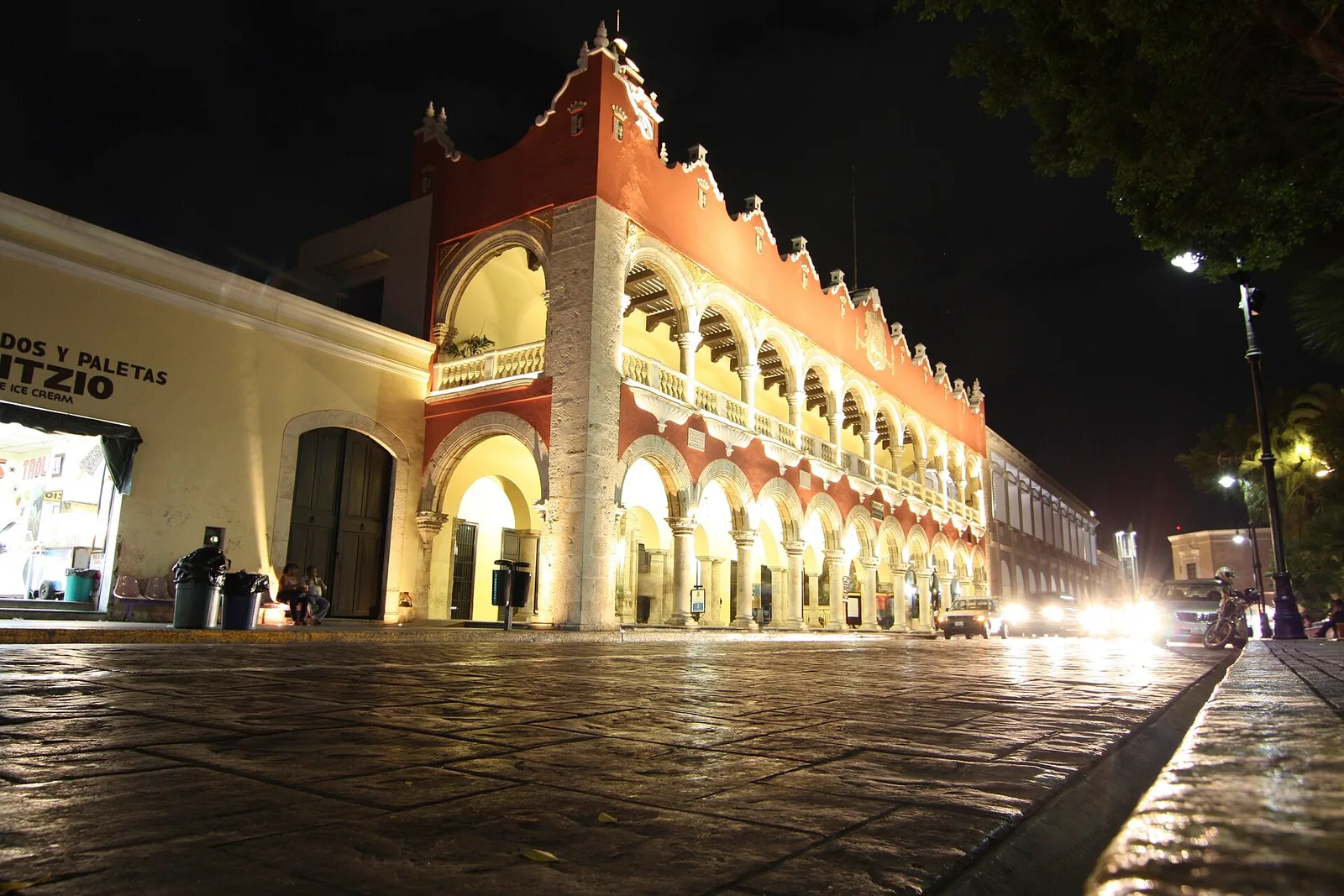
Restored colonial houses, plazas and markets — the most atmospheric part of the city.
The historic center radiates out from the Plaza Grande and the cathedral, on a grid of numbered streets. Neighborhoods around their own parks and churches — Santiago and Santa Ana among the most popular — have colonial houses with high ceilings, courtyards and, in many renovated homes, small pools.
Many foreigners buy and restore houses here, and there's a busy calendar of free cultural events, markets and restaurants within walking distance.
The center is the hottest and noisiest part of the city, and old houses need maintenance.
Rent $$$ · Walkable: Very · Pace: Lively · Best for: Culture lovers, Car-free living, Retirees
Good to know
- Walking is pleasant early and late in the day; midday heat from April to June is intense.
- Check a house's roof, damp and wiring, and how it stays cool — high ceilings, fans and AC in bedrooms.
- Streets near the main plazas host events and can be loud.
García Ginerés
Leafy and residential, close to the center and Paseo de Montejo but calmer.
García Ginerés, northwest of the center, is an established neighborhood of mid-20th-century houses and tree-lined streets, centered on the Parque de las Américas.
It gives you more space and shade than the historic center while keeping restaurants, markets and the center a short drive or rideshare away.
Long-term residents value it for its balance: residential calm with city life close by.
Rent $$$ · Walkable: Mostly · Pace: Quiet · Best for: Long-term residents, Families, Retirees
Good to know
- Houses here are generally larger and newer than in the historic center.
- Some daily errands are easier with a car or rideshare.
- Parque de las Américas is a local landmark and gathering place.
Montes de Amé & Altabrisa
The modern north — malls, private hospitals, international schools and newer apartments.
North Mérida is where much of the city's growth has happened: shopping centers, private hospitals, international schools, offices and modern apartment buildings.
Montes de Amé and Altabrisa put you close to all of these, with newer construction, reliable air-conditioning and parking.
It's more convenient and less charming than the center, and most errands are by car.
Rent $$$$ · Walkable: Partly · Pace: Mixed · Best for: Families, Professionals, Convenience
Good to know
- Newer homes are usually better insulated and cheaper to cool.
- Traffic builds on the main avenues and the ring road (Periférico) at rush hour.
- Expect to rely on a car or rideshares.
Temozón & Cholul
Gated developments beyond the ring road with more space and newer homes.
Temozón Norte and Cholul, north of the Periférico, have grown with gated developments of houses and apartments, many with pools, gardens and shared amenities.
Cholul was once a separate village and keeps a small-town center. Homes are newer and larger for the money than in the center.
Life here is suburban and car-based, with the north's malls and hospitals a short drive away.
Rent $$ · Walkable: Car-dependent · Pace: Quiet · Best for: Space and security, Families, Pets
Good to know
- A car is close to essential.
- Gated communities charge maintenance fees — ask what's included.
- Check the developer's track record and finished amenities before buying off-plan.
How to choose where to live in Mérida
- Plan for the heat: April to June is very hot. Prioritize shade, airflow, insulation and AC in bedrooms — and budget for electricity.
- Hurricane season: June to November brings storms. Check roofs, drainage and window protection, especially in older houses.
- Center or north?: The center gives character and walkability; the north gives newer homes, malls and hospitals. Many people rent in one before buying in the other.
- Visit in May: If you can enjoy a neighborhood in May, you'll enjoy it all year.
Getting around: The historic center is laid out on a grid of numbered streets and is walkable early and late in the day. Rideshares and taxis are widely used, and a car is handy for the northern suburbs, the coast and day trips. Tren Maya connects Mérida with other cities on the peninsula.
Safety, street by street
Safety in Mexico is very local — it can change from one block to the next. Before you commit to a neighborhood, walk it at night as well as by day, ask neighbors and building staff, and check the US State Department's advisory for Yucatán.
Yucatán is reported at Level 1, the lowest level, of the US State Department's 2026 advisory for Mexico.
Renting your first place
- Start furnished and short-term for a month or two, then sign a 12-month lease once you know the city.
- Search in person: many of the best long-term rentals are found through local agents, building signs and word of mouth rather than international websites.
- Expect a guarantor (aval) or a rental guarantee policy (póliza jurídica), plus a deposit — see renting in Mexico.
- Inspect before you sign: water supply, cistern and tank, damp, electrical wiring, internet providers, and noise at night.
Frequently asked questions
What is the best area to live in Mérida?
The historic center (including Santiago and Santa Ana) is most popular for character and walkability; García Ginerés balances calm and proximity; the north (Montes de Amé, Altabrisa, Temozón) suits families who want modern homes, schools and hospitals.
Is it better to live in the center or north of Mérida?
The center is walkable and full of colonial charm but hotter and noisier; the north is newer, more convenient and car-based. It depends whether you value atmosphere or convenience more.
Where do expat families live in Mérida?
Many choose the north — Montes de Amé, Altabrisa, Temozón and Cholul — for international schools, private hospitals and newer homes with space.